
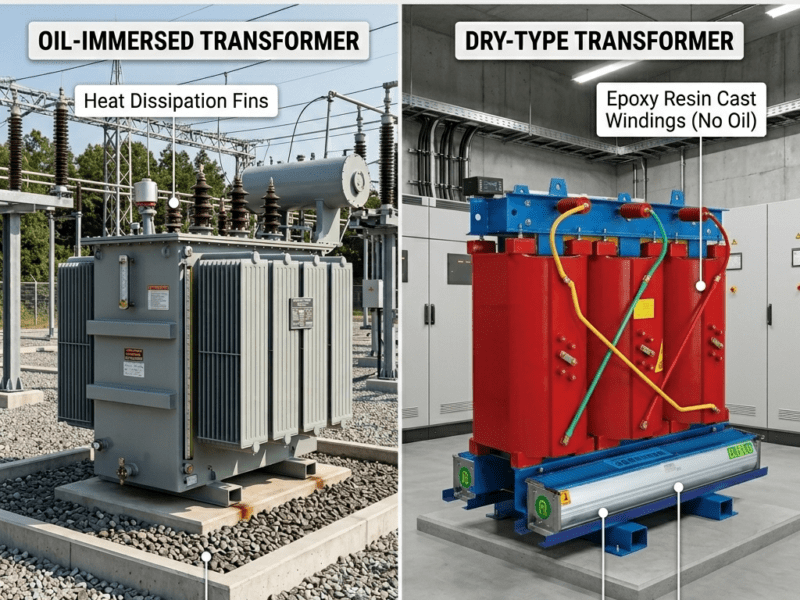
When specifying distribution transformers, one of the fundamental decisions engineers face is choosing between oil-immersed and dry-type designs. Both technologies have evolved significantly over the past decades, and each offers distinct advantages for specific applications. This in-depth comparison examines every aspect you need to consider.
Fundamental Design Differences
Oil-immersed transformers submerge the core and windings in insulating oil, typically mineral oil, though synthetic esters and natural esters are gaining popularity. The oil serves dual purposes: electrical insulation between windings and heat transfer medium. Heat generated in the windings transfers to the oil, which circulates through convection or forced flow, dissipating heat through radiators or cooling fins.
Dry-type transformers eliminate liquid insulation entirely. The windings are either cast in epoxy resin or encapsulated in moisture-resistant insulation materials. Air serves as both the insulation medium and cooling agent. Heat dissipates directly from the winding surface to surrounding air through natural convection or forced air circulation.
The fundamental difference in insulation media cascades into every other design consideration: fire safety, environmental impact, maintenance requirements, and application suitability.
Performance and Efficiency Comparison
Modern designs from both categories achieve similar efficiency levels, though the path to efficiency differs.
Oil-immersed transformers excel at thermal management. Oil’s high thermal conductivity and specific heat capacity efficiently transfer heat from windings to cooling surfaces. This makes oil-immersed units the preferred choice for high-capacity applications, typically above 2500kVA, though smaller oil units remain common in many markets. The oil’s superior cooling enables more compact designs at higher power ratings.
Dry-type transformers have improved dramatically with better insulation materials and winding designs. Premium dry-type units now achieve efficiencies exceeding 98.5%, competitive with oil-immersed equivalents. However, their thermal management is inherently limited by air’s poor thermal properties compared to oil. At very high capacities, dry-type transformers become larger and more expensive than oil-immersed alternatives.
For capacities below 2500kVA, both technologies offer comparable efficiency. The choice then depends on other factors rather than pure performance metrics.
Load Handling Capabilities
Oil-immersed transformers handle overload conditions better than dry-type units. The oil’s thermal mass absorbs heat during temporary overloads, allowing the transformer to sustain higher currents for limited periods without damaging insulation. This thermal inertia provides valuable flexibility in applications with fluctuating loads or infrequent peak demands.
Dry-type transformers have limited overload capability. The windings heat rapidly under overload conditions, and the insulation system has less tolerance for thermal stress. Most dry-type transformers can handle 10-15% overload for short durations, while oil-immersed units might sustain 25-30% overloads within guidelines.
Consider your load profile carefully. If your application involves frequent or sustained overloads, oil-immersed transformers offer more robust performance.
Fire Safety and Insurance Considerations
Fire safety represents the most significant differentiator between the two technologies.
Oil-immersed transformers contain flammable liquid, typically with flash points between 140-160°C for mineral oil. In the event of internal faults, arcing can decompose the oil, generating acetylene and other flammable gases. If the pressure builds sufficiently, the tank can rupture, and oil can ignite. While modern designs include pressure relief devices, rupture-resistant tanks, and fire-resistant fluids, the fire risk remains.
Dry-type transformers are inherently fire-safe. The insulation materials are self-extinguishing and don’t contain flammable liquids. Even under severe internal faults, fire risk is minimal. This makes dry-type transformers the mandatory choice for:
- Indoor installations in commercial buildings
- Underground substations
- Environments with stringent fire codes
- Locations where oil containment is impractical
- Hospitals, schools, and public buildings
Insurance premiums often favor dry-type transformers for indoor applications due to reduced fire risk. Some facilities specify dry-type transformers specifically to simplify compliance with fire codes and reduce insurance costs.
Environmental Impact and Sustainability
Environmental considerations increasingly influence transformer selection.
Oil-immersed transformers pose environmental risks from potential oil leaks. Even small leaks can contaminate soil and groundwater, requiring expensive remediation. Regulations in many jurisdictions mandate oil containment systems, leak detection, and emergency response plans. Using biodegradable ester fluids reduces environmental impact but increases costs.
Dry-type transformers eliminate liquid-related environmental risks entirely. No containment systems are needed, and end-of-life disposal is simpler. However, the epoxy insulation materials aren’t easily recyclable. The environmental footprint shifts from operational risks to disposal considerations.
From a lifecycle perspective, consider:
- Initial environmental impact of manufacturing
- Operational risks and potential contamination
- End-of-life disposal and recycling
- Energy efficiency affecting overall carbon footprint
Installation and Space Requirements
Installation requirements differ substantially between the two types.
Oil-immersed transformers are heavier and require foundations designed for the total weight including oil. Outdoor installations need concrete pads with oil containment berms or catch basins. Indoor installations require fire-rated vaults, ventilation for cooling, and oil containment provisions. Access must accommodate oil sampling, maintenance, and potential tank removal.
Dry-type transformers are lighter per kVA rating (no oil weight) and don’t require liquid containment. They can be installed directly on floors or elevated platforms. Indoor installations need adequate ventilation but no fire-rated vaults. Many dry-type units feature enclosures rated for direct installation in occupied spaces.
For indoor applications, dry-type transformers often reduce overall installation costs despite higher equipment prices. The savings come from simplified civil works, fire protection systems, and containment infrastructure.
Maintenance Requirements and Lifecycle Costs
Maintenance philosophies differ significantly.
Oil transformers require regular oil testing to monitor insulation condition, moisture content, and dissolved gases that indicate internal problems. Oil quality degrades over time and eventually requires filtration or replacement. Seals and gaskets need inspection to prevent leaks. Cooling systems (pumps, fans, radiators) require maintenance. Properly maintained oil-immersed transformers last 30-40 years or longer.
Dry transformers require minimal maintenance. Visual inspections check for dust accumulation, corrosion, and physical damage. Cleaning the windings and ventilation paths is typically the only routine work needed. No oil sampling or testing is required. Dry-type transformers generally last 25-30 years, though insulation degradation over time is harder to monitor than in oil units.
Total cost of ownership calculations must include:
- Initial purchase price (dry-type often 20-40% higher)
- Installation costs (dry-type often lower for indoor applications)
- Maintenance costs over 20-30 years
- Efficiency losses over the operating lifetime
- End-of-life disposal costs
Application-Specific Recommendations
Use oil-immersed transformers when:
- Capacity exceeds 2500kVA
- Outdoor installation is planned
- Overload capability is critical
- Initial cost is the primary concern
- Fire codes permit oil-filled equipment
- Regular maintenance infrastructure exists
Use dry-type transformers when:
- Indoor installation is required
- Fire safety is paramount
- Environmental regulations restrict oil-filled equipment
- Maintenance resources are limited
- Installation must be simple and compact
- Insurance requirements favor non-flammable equipment
Making the Right Choice
There’s no universal answer – the right choice depends on your specific application, location, budget, and risk tolerance. Evaluate both options against your project requirements, local regulations, and lifecycle costs. Consult with manufacturers and experienced engineers who understand your application domain.
Many electrical systems use both types strategically – oil-immersed transformers in outdoor substations supplying main power, and dry-type units for indoor distribution within buildings. This hybrid approach optimizes each technology’s strengths.
The investment in careful selection pays dividends through decades of reliable, efficient operation.