
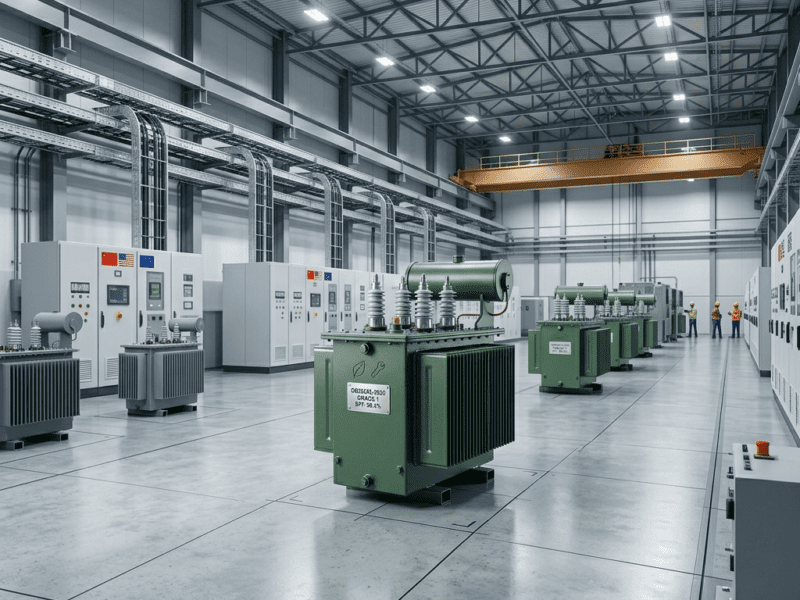
Energy efficiency has become a cornerstone of modern transformers design and selection. With electricity generation accounting for a significant portion of global carbon emissions, regulators worldwide have implemented increasingly stringent efficiency standards for distribution transformers. Understanding these standards is essential for engineers, procurement specialists, and facility managers responsible for transformer selection and compliance.
The Evolution of Energy Efficiency Standards
Transformer efficiency standards have evolved dramatically over the past two decades. Early standards focused primarily on safety and basic performance, with efficiency as a secondary consideration. Rising energy costs, environmental concerns, and technological advances shifted the focus toward minimizing losses.
China’s GB20052-2020 standard represents the latest evolution in this journey, replacing earlier versions with more demanding requirements. The standard establishes three efficiency grades, with Grade 1 representing the highest efficiency and Grade 3 setting the minimum acceptable level for market access. This tiered approach encourages manufacturers to develop increasingly efficient products while maintaining accessibility for different market segments.
Similar regulatory frameworks exist globally. The United States Department of Energy (DOE) established efficiency standards that became effective in 2016, with subsequent amendments raising the bar further. The European Union’s Eco-design Directive (Regulation 548/2014) mandates minimum efficiency levels for transformers placed on the EU market. These regulations share common objectives: reducing energy waste, lowering carbon emissions, and driving technological innovation.
Understanding Transformers Losses
To appreciate efficiency standards, you must understand where transformers losses occur. All transformers lose energy through two primary mechanisms:
No-load losses, also called core losses or iron losses, occur whenever the transformer is energized, regardless of the load connected. These losses result from the alternating magnetic flux in the core, causing hysteresis and eddy current losses in the core steel. No-load losses are constant and present 24/7 as long as the transformer remains connected to the supply.
Load losses, also called copper losses or winding losses, vary with the square of the load current. As current flows through the windings, resistance causes heating. Higher loads mean higher currents and greater losses. The relationship is quadratic – doubling the load current quadruples the load losses.
Total losses equal the sum of no-load losses and load losses at the operating point. The efficiency at any load equals the output power divided by the input power (output plus losses). Maximum efficiency occurs at the load where no-load losses equal load losses.
Modern efficiency standards address both loss types. Some applications benefit from transformers optimized for low no-load losses, while others require optimization for the expected loading profile.
China’s GB20052-2020: Detailed Requirements
GB20052-2020 applies to three-phase oil-immersed and dry-type distribution transformers with capacities from 30kVA to 2500kVA, operating at 10kV and 35kV voltage levels. The standard specifies minimum efficiency values at different load factors and power factors.
The standard defines efficiency grades:
Grade 1 represents premium efficiency, suitable for applications where maximum energy savings justify higher initial costs. These transformers typically use advanced core materials like amorphous metal or high-grade grain-oriented silicon steel, optimized winding designs, and premium insulation systems.
Grade 2 represents standard high efficiency, meeting the performance levels expected for most commercial and industrial applications. These transformers balance efficiency improvements with reasonable cost increases over conventional designs.
Grade 3 establishes the minimum efficiency threshold for market access. Transformers falling below this grade cannot be sold in the Chinese market. This requirement effectively eliminates the least efficient designs from circulation.
The standard specifies efficiency at different reference load factors. For oil-immersed transformers, efficiency is measured at 50% and 100% load. Dry-type transformers follow similar measurement protocols. This approach ensures that efficiency claims reflect realistic operating conditions rather than idealized test scenarios.
Compliance requires type testing by accredited laboratories. Manufacturers must obtain test certificates demonstrating that their products meet the declared efficiency grade. Market surveillance authorities conduct random testing to verify ongoing compliance.
Comparison with International Standards
Understanding how GB20052-2020 compares with international standards helps engineers working on global projects.
The U.S. DOE standards establish minimum efficiency levels based on transformer capacity and type. The standards differentiate between liquid-filled and dry-type transformers, with liquid-filled units generally having slightly lower efficiency requirements due to their inherent thermal advantages. DOE standards reference specific test procedures and define compliance requirements for manufacturers selling in the U.S. market.
The EU Eco-design Regulation takes a similar approach but with different efficiency values and measurement conditions. The regulation applies to transformers from 1kVA to well beyond distribution transformer ranges, covering a broader scope than Chinese or U.S. standards. The EU also mandates providing efficiency information at multiple load points, giving users better data for selection decisions.
In general, the three regulatory frameworks aim for similar efficiency levels, though direct comparison is complicated by different test conditions and measurement protocols. Transformers designed to meet one region’s standards typically perform well under others, but certification requires separate testing against each standard’s specific requirements.
For global manufacturers, developing products that meet the most stringent standards provides flexibility to serve any market without maintaining separate product lines. This strategy increases development costs but simplifies manufacturing and inventory management.
Economic Impact of Efficiency Standards
Higher efficiency transformers cost more upfront but deliver substantial lifecycle savings. Understanding the economics helps justify the investment in premium efficiency units.
Consider a 1000kVA transformer operating at 60% average load factor over 20 years. A standard efficiency unit might have total losses of 12kW at this operating point, while a high-efficiency alternative reduces losses to 9kW – a 3kW improvement. Over 20 years of continuous operation:
3kW × 8760 hours × 20 years = 525,600 kWh saved
At industrial electricity rates, this translates to substantial monetary savings, often exceeding the transformer’s purchase price multiple times. The payback period for efficiency improvements typically ranges from 3-7 years, depending on local electricity costs and transformer loading.
Beyond direct energy savings, high-efficiency transformers generate less heat, reducing cooling requirements and associated costs. They also tend to have longer lifespans due to reduced thermal stress on insulation systems.
Many utilities offer rebates or incentives for installing high-efficiency transformers. These programs recognize that reduced losses benefit the entire electrical system, not just individual customers. Incentives can significantly improve the economics of premium efficiency investments.
Selecting Transformers Under New Standards
When selecting transformers under GB20052-2020 or other efficiency standards, consider these factors:
First, determine which efficiency grade suits your application. Grade 1 transformers make sense for applications with high load factors and long operating hours, where energy savings accumulate rapidly. Grade 2 or Grade 3 units might suffice for lightly loaded applications or installations with limited operating hours.
Second, analyze your load profile. Transformers with low no-load losses benefit applications with low load factors or significant idle periods. If your transformer operates near rated capacity most of the time, prioritize low load losses instead.
Third, consider total cost of ownership. Initial purchase price tells only part of the story. Calculate the present value of energy losses over the expected lifespan, accounting for electricity cost escalation. This analysis often justifies investing in higher efficiency grades.
Fourth, verify manufacturer claims. Request test certificates from accredited laboratories confirming the declared efficiency grade. Reputable manufacturers readily provide this documentation.
Fifth, consider future load growth. Selecting a transformer with slightly higher capacity than current needs might be appropriate, but remember that efficiency drops at very low load factors. Balance growth accommodation against efficient operation.
Impact on Manufacturing and Technology
Efficiency standards drive technological innovation throughout the transformer industry. Manufacturers have developed numerous advances to meet increasingly demanding requirements.
Core materials have seen significant improvement. Conventional grain-oriented silicon steel remains common, but amorphous metal cores reduce no-load losses by 60-70% compared to traditional designs. The trade-off is higher cost and more complex manufacturing processes. Premium grades of silicon steel with lower loss characteristics offer a middle-ground solution.
Winding designs have evolved to reduce load losses. Foil windings, transposed conductors, and optimized conductor sizing all contribute to lower resistance losses. Better insulation materials allow tighter winding packs, reducing the mean turn length and thus resistance.
Cooling system improvements help transformers operate efficiently at higher loads without excessive temperature rise. Better oil circulation in liquid-filled units and enhanced air flow paths in dry-type transformers maintain optimal operating temperatures.
Manufacturing quality control has become more critical. Even small variations in core assembly, winding tension, and insulation application affect efficiency. Automated manufacturing processes and statistical quality control ensure consistent performance across production runs.
Compliance and Documentation
Ensuring compliance with efficiency standards requires proper documentation and testing.
Manufacturers must provide nameplate information including efficiency grade, rated efficiency values, and losses at reference conditions. This information enables users to verify compliance and make informed selections.
Type test reports from accredited laboratories demonstrate that transformer designs meet the declared specifications. These reports include temperature rise tests, loss measurements, and efficiency calculations according to standardized procedures.
Routine test reports for individual units confirm that each transformer leaving the factory meets the design specifications. These tests typically include no-load loss measurement, load loss measurement at rated current, and resistance measurements for calculating losses at different load points.
For project specification, reference the applicable standard explicitly and specify the required efficiency grade. Include requirements for test certificates and documentation in procurement specifications.
Future Trends in Efficiency Standards
Efficiency standards will continue evolving, driven by climate goals and technological capabilities.
The Chinese government has indicated that future revisions of GB20052 will likely raise minimum efficiency levels, phasing out lower grades and introducing new premium categories. The timeline aligns with China’s carbon neutrality goals for 2060.
International harmonization efforts continue. While different regions maintain separate standards, convergence on measurement methods and efficiency levels simplifies compliance for global manufacturers. The International Electrotechnical Commission (IEC) develops standards that influence national and regional regulations.
Broader scope of regulation is expected. Current standards focus primarily on distribution transformers, but future regulations may address power transformers, special application transformers, and related equipment more comprehensively.
Integration with smart grid technologies represents an emerging frontier. Transformers with monitoring capabilities, variable efficiency modes, and grid-interactive features may see future regulatory attention.
Conclusion
Energy efficiency standards for transformers represent a critical tool in the global effort to reduce energy waste and carbon emissions. GB20052-2020 and similar international regulations establish clear expectations for transformer performance while driving technological innovation.
For engineers and procurement professionals, understanding these standards enables better transformer selection decisions. Look beyond initial purchase price to consider lifecycle costs, verify compliance through proper documentation, and match efficiency characteristics to your application’s loading profile.
The investment in high-efficiency transformers pays dividends through decades of reduced energy costs and environmental impact. As standards continue evolving, staying informed ensures your transformer selections remain compliant and economically optimal.