
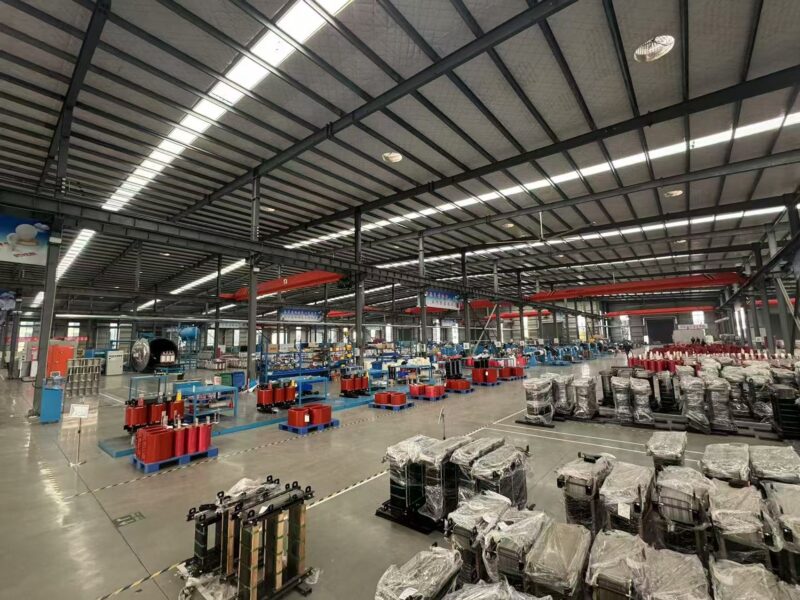
In the global transformer market, delivery time has become a critical competitive factor. Projects facing tight deadlines, emergency replacements, and seasonal construction windows require transformers quickly. China’s transformer industry has earned a reputation for shorter delivery times compared to manufacturers in other regions. Understanding the factors behind this speed helps procurement professionals make informed sourcing decisions.
The Delivery Time Challenge
Transformer lead times have historically been lengthy, often measured in months rather than weeks. Several factors contribute to extended production cycles:
Customization requirements mean most transformers are built to order rather than drawn from stock. Each unit must be designed, materials procured, and production scheduled. The engineering phase alone can consume weeks for complex specifications.
Manufacturing complexity involves multiple processes: core cutting and stacking, winding fabrication, tank fabrication, assembly, testing, and finishing. Each step requires specialized equipment and skilled labor. Bottlenecks at any stage extend overall production time.
Material availability affects timelines, particularly for specialized components. High-efficiency core materials, specific conductor sizes, bushings, and accessories might have their own lead times that constrain transformer production.
Testing and quality assurance processes, while essential, add time to production schedules. Type testing, routine testing, and commissioning checks ensure transformer quality and compliance but extend manufacturing cycles.
For project managers and procurement professionals, these extended lead times create challenges. Construction schedules might be delayed waiting for transformer delivery. Emergency replacements force extended downtime. Seasonal construction windows in cold climates allow limited installation periods – missing a window means waiting another year.
China’s Manufacturing Advantage
Chinese transformer manufacturers have developed capabilities that significantly reduce production timelines. Several interrelated factors contribute to this advantage.
Integrated supply chains provide immediate access to most required materials. China produces the complete range of transformer components domestically: silicon steel and amorphous metal for cores, copper and aluminum conductors, insulation materials, bushings, tap changers, and accessories. This domestic supply base eliminates delays waiting for imported components.
Scale of production creates manufacturing efficiency. China’s transformer industry produces hundreds of thousands of units annually, from small distribution transformers to large power transformers. This volume drives investment in manufacturing capacity and creates experienced, specialized workforces.
Dedicated facilities for different transformer types optimize production. Rather than manufacturing all products in general-purpose facilities, many Chinese manufacturers operate separate production lines for oil-immersed transformers, dry-type transformers, amorphous alloy transformers, and specialized products. This specialization improves efficiency and reduces changeover times.
Advanced manufacturing equipment accelerates production. Automated core cutting lines, CNC winding machines, robotic welding systems, and automated test equipment perform tasks faster and more consistently than manual processes. Chinese manufacturers have invested heavily in such equipment to improve productivity.
Parallel production processes compress overall timelines. While some manufacturing steps must proceed sequentially, Chinese manufacturers organize production to maximize parallel processing. Winding fabrication proceeds while core materials are being cut. Tank fabrication occurs simultaneously with core and coil assembly. This parallelization reduces total elapsed time.
Typical Delivery Times Compared
Understanding typical delivery times helps set realistic expectations and plan procurement.
For standard distribution transformers (50-2500kVA, 10kV or 35kV), Chinese manufacturers commonly quote production times of 4-8 weeks from order confirmation. Some manufacturers offer expedited production at 2-4 weeks for standard specifications. This includes engineering, production, testing, and preparation for shipment.
Comparable delivery times from manufacturers in other regions typically range from 8-16 weeks for similar products. European manufacturers might quote 10-14 weeks as standard. North American manufacturers commonly estimate 12-16 weeks. These timelines reflect similar manufacturing processes but different supply chain configurations and production volumes.
For specialized transformers, the delivery time difference often narrows but remains significant. Custom specifications, non-standard voltages, and special performance requirements add engineering time regardless of manufacturing location. Chinese manufacturers might deliver custom units in 8-12 weeks, while other regions require 16-24 weeks.
Large power transformers (above 35kV class) involve longer production times universally due to greater complexity and lower production volumes. Chinese manufacturers might deliver 110kV or 220kV transformers in 12-20 weeks, compared to 20-30 weeks from other manufacturers.
These comparisons represent general patterns – individual manufacturers vary significantly. Some premium manufacturers in other regions maintain stock programs or rapid-response production that matches Chinese delivery times. Conversely, some Chinese manufacturers facing capacity constraints might quote extended lead times.
Quality Assurance Without Compromise
A common concern about fast production is whether quality suffers. Chinese manufacturers address this through systematic quality control integrated into production processes.
Quality control checkpoints throughout production identify issues early, when correction is easier and less time-consuming. Incoming material inspection, in-process checks, and final testing ensure quality without extending production time.
Automated testing systems perform routine tests efficiently while maintaining accuracy. Computer-controlled test equipment completes efficiency measurements, resistance tests, and insulation tests quickly and consistently. Results are recorded automatically, reducing documentation time.
Type testing programs establish baseline performance for standard designs. Rather than testing each unit extensively, manufacturers type test representative units and then perform routine tests on production units. This approach ensures quality while maintaining production speed.
Quality certifications (ISO 9001, KEMA, CESI, and others) require documented quality management systems. Maintaining these certifications requires consistent quality practices, not shortcuts that compromise product integrity.
The fastest production is worthless if the transformer fails prematurely or doesn’t meet specifications. Reputable Chinese manufacturers understand this and maintain quality while compressing timelines through efficiency, not corner-cutting.
Communication and Project Management
Effective communication throughout the production process helps ensure timely delivery and prevents misunderstandings that cause delays.
Chinese manufacturers experienced in export markets have developed communication systems that work across time zones and languages. Dedicated export teams coordinate with international customers, providing regular updates on production status, flagging potential issues early, and managing documentation requirements.
Modern communication tools enable real-time visibility into production progress. Customers can track their orders through web portals, receive photo and video updates, and participate in virtual factory acceptance tests when on-site presence isn’t feasible.
Proactive communication identifies potential delays early, allowing adjustments before they impact delivery dates. Material shortages, production issues, or testing problems communicated promptly give customers time to adjust plans.
Documentation for customs, certification, and commissioning requires careful preparation. Chinese manufacturers experienced in international shipping prepare documentation correctly the first time, avoiding delays at borders or during installation.
Logistics and Transportation
Production time is only part of the delivery equation. Transportation adds time depending on destination and shipping method.
Domestic delivery within China is typically fast due to extensive transportation infrastructure. Trucking reaches most destinations within a few days. For coastal or river-accessible projects, barge shipping offers economical options.
International shipping times vary by destination and method. Ocean freight from Chinese ports to Southeast Asia might require 1-2 weeks. Shipping to the Middle East typically takes 2-3 weeks. European destinations require 3-5 weeks depending on port. Americas might require 4-6 weeks. These times are beyond manufacturer control but predictable based on shipping routes.
Air freight offers rapid delivery for urgent needs, though at significant cost premium. Small to medium transformers can ship by air, arriving within days rather than weeks. This option suits emergency replacements more than planned projects.
Land transportation to neighboring countries (Russia, Central Asia, Southeast Asia via land routes) offers alternatives to ocean shipping for suitable locations. Border crossings and varying infrastructure quality affect timing.
Forward-looking procurement planning accounts for both production and shipping times. The shorter production times from Chinese manufacturers provide flexibility, but transportation times remain significant for distant destinations.
Case Examples
A utility company in Southeast Asia required emergency replacement of a failed 10MVA, 35kV transformer. The original manufacturer in Europe quoted 14 weeks for a replacement unit. A Chinese manufacturer offered 5-week production plus 10-day shipping. The utility received the replacement transformer in under 7 weeks total, minimizing outage duration.
A mining project in Africa with a tight construction schedule ordered multiple 35kV transformers from a Chinese manufacturer. The order included units of various capacities (5, 8, and 12.5 MVA) with custom specifications. Production required 8 weeks, and shipping to the project site took 3 weeks. The transformers arrived before the construction team was ready to install them, avoiding schedule delays.
A European EPC contractor working on a Middle Eastern project initially specified European transformers with 16-week lead times. When the project schedule compressed due to client requirements, the contractor switched to a Chinese manufacturer able to deliver equivalent units in 9 weeks. The cost savings from Chinese sourcing were significant, and the faster delivery enabled the compressed schedule.
Factors Beyond Manufacturer Control
While Chinese manufacturers typically deliver faster, some factors extend timelines regardless of manufacturing location.
Customer approval cycles can add time if specifications require multiple review rounds, or if approval processes are slow. Customers can expedite delivery by streamlining internal approval processes and providing complete, clear specifications initially.
Customs clearance in the destination country varies by location and regulatory complexity. Some countries clear shipments quickly; others require extensive documentation and inspection. Working with experienced freight forwarders familiar with destination requirements helps minimize delays.
Site preparation affects when the transformers can actually be installed and energized. Foundation work, cable installation, and protection system setup must be complete before transformer installation. Production time savings don’t benefit projects if site readiness delays installation.
Payment processing affects production scheduling. Manufacturers typically begin production after receiving deposits or letters of credit. Payment delays translate directly to delivery delays.
Optimizing Your Procurement Process
To benefit from China’s faster delivery times, structure your procurement process appropriately.
Provide complete specifications with your initial inquiry. Include all required performance parameters, standards compliance, accessories, and special requirements. Incomplete specifications require clarification cycles that extend production time.
Confirm orders promptly once quotations are received and approved. Production scheduling begins with order confirmation and deposit payment. Delays in confirmation push back production slots.
Plan for shipping time in your schedule. While Chinese production might be 4-6 weeks faster than alternatives, shipping time to distant destinations is similar regardless of manufacturing location.
Consider standard specifications when possible. Standard designs have established production processes, tested configurations, and readily available materials. Custom specifications always require more time.
Build relationships with manufacturers. Established relationships improve communication, enable priority treatment during capacity constraints, and provide better understanding of realistic timelines.
Conclusion
China’s transformer industry offers significant delivery time advantages for most transformer types and capacities. This advantage stems from integrated supply chains, manufacturing scale, specialized facilities, advanced equipment, and efficient production processes.
Quality doesn’t need to suffer from speed – reputable manufacturers maintain quality systems that ensure product integrity while producing efficiently. Communication and logistics planning ensure that production time advantages translate to actual delivery improvements.
For projects with tight timelines, emergency replacements, or limited construction windows, Chinese manufacturers provide compelling delivery time advantages. Understanding the factors behind this speed helps procurement professionals plan effectively and make sourcing decisions that support project success.
While production time is shorter, don’t forget to account for transportation time in your planning. The total delivery time includes both manufacturing and shipping, and shipping times vary by destination regardless of where transformers are produced.