
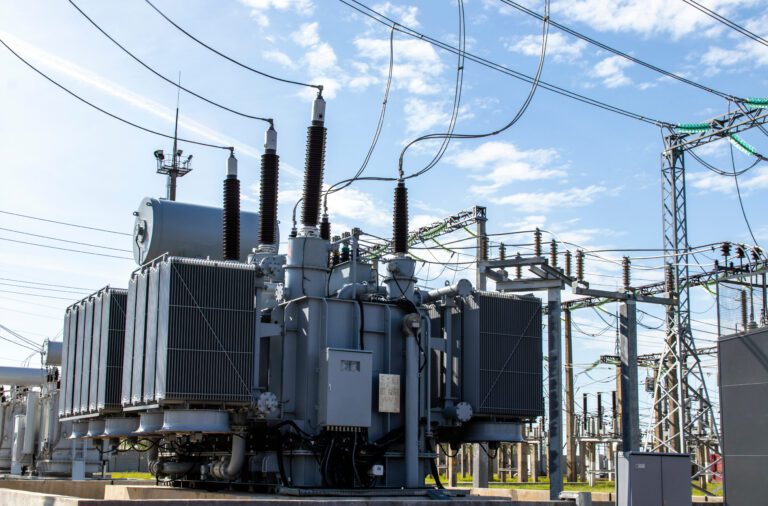
Understanding transformer losses is fundamental to selecting the right equipment for your application. No-load losses, often overlooked in favor of load losses, significantly impact total cost of ownership, especially for applications with variable loading patterns. This comprehensive guide explains no-load losses, how to calculate them, and how to compare options effectively.
What is No-Load Loss?
No-load loss, also called core loss or iron loss, is the power consumed by a transformer when energized at rated voltage with no load connected to the secondary. This loss occurs continuously whenever the transformer is connected to the supply, regardless of the load being served.
The term “no-load” describes the measurement condition, not the operational reality. In actual operation, no-load losses are present whether the transformer is lightly loaded, fully loaded, or completely unloaded. They are constant losses that cannot be reduced by operational means once the transformer is energized.
No-load losses typically range from 0.1% to 0.5% of the transformer’s rated capacity. A 1000kVA transformer might have no-load losses between 1kW and 5kW depending on design and efficiency grade. While these percentages seem small, the continuous nature of the loss makes the cumulative energy consumption substantial.
Over a 20-year lifespan, a transformer with 2kW no-load losses consumes 350,400 kWh (2kW × 8760 hours × 20 years). At industrial electricity rates, this represents tens of thousands of dollars in energy cost. Selecting a transformer with lower no-load losses can significantly reduce this lifetime cost.
Components of No-Load Loss
No-load losses comprise several distinct components, each arising from different physical phenomena.
Hysteresis losses result from the magnetic domains in the core material repeatedly aligning and realigning with the alternating magnetic field. Each magnetization cycle requires energy to overcome internal friction in the material. Hysteresis losses are proportional to the area of the hysteresis loop for the core material and the frequency of magnetization.
Eddy current losses occur when the alternating magnetic flux induces circulating currents in the core material. These currents flow perpendicular to the magnetic flux and dissipate energy as heat due to the core material’s electrical resistance. Eddy current losses increase with the square of flux density and with material thickness.
Additional losses include various minor components: losses in structural steel parts due to stray flux, dielectric losses in insulation materials, and losses from imperfect core joints. These typically represent a small fraction of total no-load losses but are considered in accurate loss calculations.
The relative contribution of each component varies with core material and design. In transformers using conventional grain-oriented silicon steel, hysteresis and eddy current losses are roughly equal. In amorphous alloy transformers, the material’s thin structure virtually eliminates eddy currents, and hysteresis losses dominate.
Factors Affecting No-Load Loss
Several design and operational factors influence no-load loss levels.
Core material selection has the most significant impact. Grain-oriented silicon steel, the traditional material, offers good performance at moderate cost. High-permeability grades of silicon steel reduce losses but increase material cost. Amorphous metal cores reduce losses by 60-75% compared to conventional silicon steel but with higher manufacturing complexity and cost.
Core design affects loss levels. The core cross-sectional area determines flux density for a given voltage – larger cores operate at lower flux density and lower loss per unit volume. The core geometry (shape, joint design) influences flux distribution and losses at joints. Better joint designs minimize additional losses from flux distortion.
Operating voltage influences losses. No-load losses increase rapidly with overvoltage – approximately by the square of voltage ratio. A transformer operating at 5% overvoltage might have 10-15% higher no-load losses. Conversely, under-voltage operation reduces losses but also reduces transformer capacity.
Frequency affects losses since hysteresis loss is proportional to frequency and eddy current loss increases with frequency squared. Transformers designed for 60Hz operation will have higher losses if operated at 50Hz (due to higher flux density) and vice versa.
Temperature has a minor effect. No-load losses decrease slightly with increasing temperature due to increased core material resistivity reducing eddy currents. This effect is small and usually neglected in practical calculations.
Calculating No-Load Loss
Understanding how to calculate no-load loss helps in comparing transformers and estimating operating costs.
The no-load loss measured during factory testing represents the loss at rated voltage and frequency under standard reference conditions (typically 75°C for load loss, though no-load loss is relatively independent of temperature).
For operating conditions different from rated values, corrections are sometimes necessary. If operating voltage differs from rated voltage, no-load loss changes approximately by the square of the voltage ratio:
P₀(operating) = P₀(rated) × (V(operating)/V(rated))²
This relationship shows why voltage regulation matters for transformer efficiency. Consistently high line voltage increases no-load losses.
For frequency variations, the correction is more complex since hysteresis and eddy current components scale differently. Approximate corrections can be made, but manufacturers typically provide data for specific frequencies.
Annual energy loss from no-load operation is straightforward:
E(no-load) = P₀ × Hours(energized)
For a transformer energized continuously throughout the year (8760 hours), the annual no-load energy loss in kWh equals the no-load loss in kW multiplied by 8760.
Monetary cost of no-load losses over the transformer lifetime requires present-value calculation:
Cost = P₀ × Hours × Electricity Rate × [(1 – (1 + r)^-n) / r]
Where r is the discount rate and n is the number of years. This calculation accounts for the time value of money, recognizing that savings years in the future are worth less than immediate savings.
No-Load Loss vs. Load Loss
Understanding the relationship between no-load and load losses helps optimize transformer selection for specific applications.
No-load losses are constant whenever the transformer is energized. Load losses vary with the square of the load current:
P(load) = P(load-rated) × (Load/Rated Load)²
Total losses at any operating point equal the sum:
P(total) = P₀ + P(load-rated) × (Load/Rated Load)²
Maximum efficiency occurs when no-load losses equal load losses. Solving for the load factor at maximum efficiency:
Load factor for max efficiency = √(P₀ / P(load-rated))
For a transformer with no-load loss of 1.5kW and rated load loss of 10kW, maximum efficiency occurs at √(1.5/10) = 0.387 or approximately 39% load.
This relationship has important implications for transformer selection:
For applications with low load factors (residential distribution, facilities with extended idle periods), selecting transformers with low no-load losses is crucial. The transformer operates much of the time at loads below the maximum efficiency point, where no-load losses dominate total losses.
For applications with high load factors (industrial facilities with continuous operation near rated capacity), load losses dominate. While no-load losses still matter, the emphasis should be on reducing load losses through proper sizing and efficient winding design.
For applications with variable loads, the loss analysis must consider the load profile. Calculate total energy losses over a representative period:
E(total) = P₀ × Hours(energized) + Σ[P(load-rated) × (L_i/Rated)² × t_i]
Where L_i represents load levels and t_i represents time at each load level.
Comparing Transformer Options
When evaluating different transformer options, no-load loss comparison should be part of the selection process.
Manufacturer data sheets provide no-load loss values for each transformer model. Compare these values directly – lower values mean lower continuous energy consumption.
Energy efficiency standards like GB20052-2020 establish efficiency grades based on both no-load and load losses. Higher grade transformers have lower losses overall, but the distribution between no-load and load losses varies by design.
Consider two 1000kVA transformers:
Transformer A: No-load loss 1.3kW, Load loss 9.5kW
Transformer B: No-load loss 0.8kW, Load loss 10.5kW
Which is better? It depends on the application:
At 30% load factor:
Transformer A total losses = 1.3 + 9.5 × 0.3² = 2.16kW
Transformer B total losses = 0.8 + 10.5 × 0.3² = 1.74kW
Transformer B is 19% better
At 70% load factor:
Transformer A total losses = 1.3 + 9.5 × 0.7² = 5.96kW
Transformer B total losses = 0.8 + 10.5 × 0.7² = 5.95kW
Nearly identical performance
At 90% load factor:
Transformer A total losses = 1.3 + 9.5 × 0.9² = 9.00kW
Transformer B total losses = 0.8 + 10.5 × 0.9² = 9.31kW
Transformer A is 3% better
This example illustrates the importance of matching transformer characteristics to the expected load profile. Transformer B excels at low load factors where its low no-load loss dominates, while Transformer A performs better at high loads.
Economic Evaluation Methods
Several methods exist for evaluating the economic impact of no-load losses.
Simple payback calculation determines how long it takes for energy savings to offset the higher initial cost of a low-loss transformer:
Payback Period = (Price premium for low-loss unit) / (Annual energy savings × Electricity rate)
For example, if a premium-efficiency transformer costs $3,000 more but saves 500kWh annually at $0.10/kWh:
Payback = $3,000 / ($50/year) = 60 years
This simple method ignores time value of money and assumes constant electricity prices, but provides a quick comparison.
Total owning cost (TOC) method accounts for both initial cost and lifetime energy costs:
TOC = Initial Price + (P₀ × A) + (P(load) × B)
Where A is the no-load loss evaluation factor (cost per kW of no-load loss) and B is the load loss evaluation factor. These factors represent the present value of energy costs over the transformer lifetime.
Loss evaluation factors can be calculated from:
A or B = Electricity Rate × Hours × [(1 – (1 + r)^-n) / r]
The hours differ for no-load and load losses. For no-load loss, use total energized hours (typically 8760 for continuous operation). For load loss, use equivalent hours at rated load, calculated from the load profile.
Many utilities and large industrial users have established loss evaluation factors for transformer procurement. Using these factors ensures consistent economic evaluation across different projects.
Technologies for Reducing No-Load Loss
Several technologies reduce no-load losses, each with trade-offs.
Amorphous metal cores offer the most dramatic reduction, cutting no-load losses by 60-75% compared to conventional silicon steel. The thin amorphous ribbon (0.025mm vs. 0.23mm for silicon steel) virtually eliminates eddy current losses, while the material’s unique structure reduces hysteresis losses. Trade-offs include higher cost, manufacturing complexity, and somewhat lower overload capability.
High-permeability silicon steel (Hi-B steel and similar grades) offers moderate improvements over conventional steel at modest cost increase. These materials have optimized grain orientation that reduces hysteresis losses. The improvement is typically 15-25% compared to standard grades.
Step-lap core joints improve flux distribution at core joints where losses are typically higher. Rather than simple butt joints, step-lap designs stagger the lamination joints across multiple layers, reducing flux distortion. This design feature adds some manufacturing complexity but minimal cost.
Optimized core sizing reduces flux density by increasing core cross-sectional area. This approach reduces losses but increases core size, weight, and cost. The trade-off between reduced losses and increased material cost must be evaluated for each application.
Annealing processes relieve stresses in core materials introduced during cutting and assembly. Proper annealing can reduce core losses by 5-10% compared to unprocessed cores. Quality manufacturers routinely anneal cores after assembly.
Measurement and Verification
No-load loss measurement follows standardized procedures ensuring accurate, comparable results.
The test is performed by applying rated voltage at rated frequency to one winding with all other windings open-circuited. The input power measured equals the no-load loss. The test is typically performed at rated voltage, though measurements at several voltages can characterize the loss curve.
Temperature correction is minimal for no-load loss since losses are relatively independent of temperature. However, test reports should specify the temperature at which measurements were made.
Measurement accuracy depends on proper instrumentation and procedures. Wattmeter accuracy, voltage and frequency stability, and proper connection of measuring circuits all affect results. Standard test methods (IEC 60076, IEEE C57.12, etc.) specify requirements.
Test reports should include:
- No-load loss at rated voltage and frequency
- No-load current (as percentage of rated current)
- Test conditions (temperature, connections)
- Measurement uncertainty
Routine tests verify each transformer meets specifications. Type tests verify design performance. Both should be reviewed when evaluating transformer options.
Practical Recommendations
Based on the analysis above, consider these recommendations:
For applications with load factors below 40%, prioritize low no-load loss. Amorphous alloy transformers often provide the best lifecycle economics despite higher initial cost.
For applications with load factors above 70%, balance no-load and load loss considerations. Premium efficiency conventional transformers might offer better value than amorphous units.
For variable load applications, calculate total energy losses over a representative period. Don’t rely on single operating point comparisons.
Always consider total owning cost, not just initial price. The present value of losses over 20-30 years often exceeds the transformer’s purchase price.
Verify manufacturer data through test reports. Don’t rely solely on catalog values, which might represent best-case or typical conditions.
Consider future load growth in transformer sizing. Oversized transformers operating at low load factors waste energy through high no-load losses. Proper sizing for expected loads optimizes efficiency.
Monitor no-load loss during operation. Significant increases over time indicate core degradation, possibly from moisture ingress, overvoltage events, or thermal damage.
Conclusion
No-load losses represent a significant component of transformer energy consumption, particularly for applications with low or variable load factors. Understanding the physics behind these losses, methods for calculating their impact, and technologies for reducing them enables informed transformer selection.
The economic impact of no-load losses extends over decades of transformer operation. Investing in low-loss transformers, particularly those with amorphous alloy cores, provides excellent returns for applications where no-load losses dominate.
When evaluating transformer options, always consider the specific load profile and calculate total owning cost. The transformer with the lowest initial price is rarely the most economical choice over its operating life. Low no-load losses, while sometimes costing more upfront, deliver savings year after year for the transformer’s entire lifespan.