
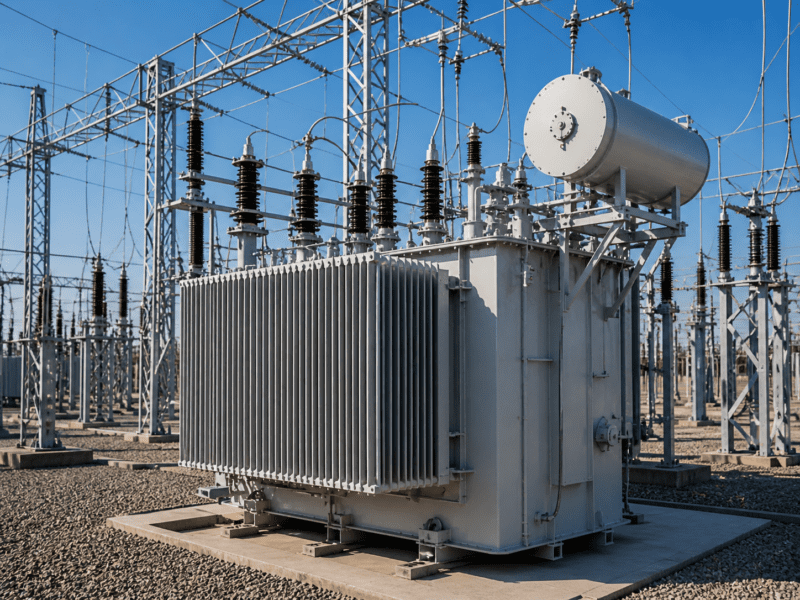
The transformer industry regularly introduces new efficiency standards and designations, leaving many engineers and procurement professionals wondering what has changed and whether upgrades are worthwhile. The S22 and S20 transformer designations represent different efficiency grades in the Chinese market, with significant implications for energy consumption, cost, and compliance. This comparison helps you decide which option suits your application.
Understanding Transformer Efficiency Designations
The S-series designations (S11, S13, S20, S22, etc.) indicate transformer efficiency levels according to Chinese standards. Higher numbers indicate higher efficiency, with each advancement bringing improved performance characteristics.
These designations have evolved over decades. S7 and S9 transformers, once common, are now obsolete and banned from new installations due to poor efficiency. S11 represented a significant improvement and remained the standard for many years. S13 and subsequent designs continued the efficiency progression.
The current active designations include S20 and S22, with S22 representing the highest efficiency level commonly available. These designations align with GB20052-2020 efficiency grades, though the relationship isn’t one-to-one. An S22 transformer typically meets or exceeds Grade 1 requirements, while an S20 transformer generally corresponds to Grade 2 or high-Grade 3 performance.
Understanding this context helps interpret what S22 and S20 designations mean for practical applications. The efficiency difference between these designations translates directly to energy savings and operational cost differences.
S20 Transformer Characteristics
S20 transformers represent a significant efficiency improvement over older designs, offering good performance at reasonable cost.
No-load losses for S20 transformers are typically 20-25% lower than the earlier S13 designs. For a 1000kVA unit, no-load loss might be around 1000-1100 watts. This represents a meaningful improvement that accumulates over the transformer’s operating life.
Load losses also improve compared to earlier generations. S20 transformers typically achieve load losses 10-15% below S13 levels. For a 1000kVA unit, load loss might be 8.5-9.5kW at rated load.
The efficiency improvement comes from better core materials and optimized winding designs. S20 transformers typically use improved grades of grain-oriented silicon steel that reduce core losses. Winding designs minimize resistance losses through better conductor sizing and improved cooling.
S20 transformers remain competitive on price. The improved materials and designs cost more than previous generations, but the premium is modest – typically 10-15% above older S13 designs. This makes S20 transformers attractive for cost-conscious applications that still require good efficiency.
The technology is mature and widely available. Most Chinese transformer manufacturers offer S20 designs across a full range of capacities and configurations. Competition among manufacturers keeps pricing competitive.
S22 Transformer Characteristics
S22 transformers represent the current state-of-the-art for conventional silicon steel core designs, pushing efficiency toward the practical limits of the technology.
No-load losses for S22 transformers are significantly lower than S20 designs – typically 25-35% improvement. For a 1000kVA unit, no-load loss might be 700-800 watts. Some advanced S22 designs achieve even lower losses approaching amorphous transformer performance.
Load losses are similarly improved, typically 10-15% below S20 levels. For a 1000kVA unit, load loss might be 7.5-8.5kW at rated load.
Achieving these efficiency levels requires premium materials and sophisticated design. S22 transformers typically use the highest grades of grain-oriented silicon steel, optimized core geometries with step-lap joints, and carefully designed windings with maximum cooling effectiveness.
The price premium for S22 transformers reflects these higher material and manufacturing costs. S22 units typically cost 15-25% more than equivalent S20 transformers. This premium must be weighed against the energy savings over the transformer’s lifetime.
Availability is more limited than for S20 designs. While major manufacturers offer S22 transformers, smaller manufacturers might not have the technology or production capabilities. Lead times might be longer for S22 units due to more specialized production requirements.
Direct Comparison: S22 vs S20
A direct comparison illustrates the differences between these efficiency grades.
Consider 1000kVA, 10kV distribution transformers of each type:
S20 Transformer:
- No-load loss: 1050W
- Load loss: 9000W
- Efficiency at 50% load: approximately 98.7%
- Efficiency at 100% load: approximately 98.3%
- Relative price: baseline (100%)
S22 Transformer:
- No-load loss: 750W
- Load loss: 8000W
- Efficiency at 50% load: approximately 99.0%
- Efficiency at 100% load: approximately 98.7%
- Relative price: approximately 115-120%
The efficiency differences seem small when expressed as percentages, but the energy impact is substantial:
At 50% load factor over 20 years:
S20 total energy losses: approximately 263,000 kWh
S22 total energy losses: approximately 219,000 kWh
Savings with S22: approximately 44,000 kWh
At industrial electricity rates of $0.10/kWh, this represents $4,400 in savings over the transformer’s life. The price premium for S22 is typically recovered within the first half of the transformer’s operating life, with net savings accumulating thereafter.
At higher load factors, the savings increase further. At 70% load factor, the lifetime savings might reach 55,000 kWh or more, worth $5,500 or more depending on electricity rates.
Application Considerations
The choice between S22 and S20 transformers depends on specific application characteristics.
Load factor is a primary consideration. Applications with low load factors (below 50%) benefit most from the reduced no-load losses of S22 transformers. Since no-load losses are present continuously, their reduction provides consistent savings regardless of loading.
Operating hours affect the payback calculation. Transformers energized continuously (24/7) realize full benefit from efficiency improvements. Applications with limited operating hours see proportionally smaller savings.
Electricity costs directly impact the economic analysis. Higher electricity rates make efficiency investments more attractive. Regions with high industrial electricity costs see shorter payback periods for S22 transformers.
Future electricity price trends affect lifecycle economics. Rising electricity prices increase the value of efficiency improvements over time. Conservative financial analysis uses current prices, but historical trends suggest electricity costs are likely to increase.
Initial cost constraints might influence the decision despite favorable lifecycle economics. Projects with tight budgets might prefer S20 transformers despite the long-term savings available from S22 units. This trade-off should be made consciously, not by default.
Regulatory requirements might mandate specific efficiency levels. Some jurisdictions require minimum efficiency grades for new installations. Verify that your transformer selection meets applicable requirements before ordering.
Total Cost of Ownership Analysis
Making the right choice requires comprehensive total cost of ownership (TCO) analysis.
Initial cost is straightforward – obtain quotations for equivalent S20 and S22 transformers from the same manufacturer to ensure fair comparison.
Installation costs are generally identical for both transformer types. The physical dimensions, weights, and connection requirements are similar. Any differences in installation cost are minimal.
Energy costs over the operating lifetime require calculation. Estimate the load profile over the transformer’s expected life, calculate annual energy losses for each transformer type, and determine the present value of these costs using an appropriate discount rate.
Maintenance costs are similar for both types. The efficiency differences don’t significantly affect maintenance requirements or costs.
End-of-life costs are also similar, though the higher residual value of the S22’s premium core materials might provide slightly better salvage value.
The TCO comparison typically shows:
- S22 transformers have higher initial cost
- S22 transformers have lower energy costs over their lifetime
- The net TCO for S22 is usually lower over a 20+ year lifespan
- The payback period for the S22 premium is typically 7-12 years
For transformers with expected lifespans of 25-30 years, the long-term economics favor S22 in most applications with reasonable load factors and electricity rates.
Regulatory Context
Understanding the regulatory context helps ensure compliant transformer selection.
GB20052-2020 establishes mandatory minimum efficiency levels and defines efficiency grades. All transformers sold in China must meet at least Grade 3 requirements. Grade 1 represents premium efficiency, and some applications might specify minimum Grade 1 or Grade 2 transformers.
S20 transformers generally meet Grade 2 or high Grade 3 requirements. S22 transformers generally meet or exceed Grade 1 requirements. When specifying transformers by efficiency grade rather than S-series designation, verify that proposed units meet the required grade.
Some regions or applications have additional requirements. Green building certifications, sustainability programs, and utility incentive programs might require or reward higher efficiency transformers. Check applicable requirements for your specific project.
Government procurement policies in some jurisdictions mandate minimum efficiency levels for publicly-funded projects. These policies aim to reduce government energy consumption and encourage efficient technology adoption.
The regulatory trend is toward stricter requirements. Future revisions of efficiency standards will likely phase out lower efficiency grades. Specifying higher efficiency transformers today provides margin for future compliance and avoids early replacement.
Future-Proofing Considerations
When selecting between S20 and S22 transformers, consider future trends.
Efficiency standards continue tightening. What meets requirements today might not meet future mandates. S22 transformers provide more margin for regulatory changes than S20 units.
Energy costs are likely to increase over time. Higher future energy prices increase the value of efficiency investments made today. The savings from S22 transformers grow if electricity prices rise.
Carbon pricing and emissions regulations are expanding. Higher efficiency transformers reduce indirect emissions from electricity generation. Future carbon costs could make efficiency even more valuable.
Technology improvements might make current S22 efficiency levels standard or even minimum in the future. Investing in high efficiency now positions your installation well for future expectations.
These considerations don’t justify unlimited spending on efficiency, but they suggest erring toward higher efficiency when the economic analysis is close.
Making the Decision
The choice between S22 and S20 transformers should be based on rational analysis of your specific situation.
For applications with high load factors, high electricity costs, and long expected operating life, S22 transformers are clearly the better choice despite higher initial cost. The energy savings will accumulate to exceed the price premium well within the transformer’s lifespan.
For applications with very low load factors or limited operating hours, S20 transformers might provide adequate performance with lower initial investment. The efficiency premium of S22 takes longer to recover when operating hours are limited.
For budget-constrained projects, S20 transformers offer good efficiency at reasonable cost. If budget constraints prevent selecting S22, S20 remains a responsible choice that meets current standards.
For applications with environmental sustainability commitments, S22 transformers support those goals through reduced energy consumption. The efficiency improvement contributes to lower carbon emissions and resource consumption.
When in doubt, perform the TCO calculation with your specific parameters. The mathematics of the comparison are straightforward, and the result will guide the decision based on your actual situation rather than assumptions.
Conclusion
The choice between S22 and S20 transformers represents a trade-off between initial cost and lifetime efficiency. S22 transformers offer superior efficiency that delivers energy savings over decades of operation, while S20 transformers provide good performance at lower initial cost.
For most applications with reasonable load factors and electricity rates, the economics favor S22 transformers over their operating lifespan. The price premium is recovered through energy savings, with net savings accumulating thereafter.
However, the right choice depends on your specific situation. Perform the analysis with your actual load profile, electricity costs, and operating expectations. Consider regulatory requirements and future trends that might affect the decision.
Both S20 and S22 transformers represent modern, efficient designs that far outperform obsolete units. Either choice provides reliable, efficient service. The decision between them should be made thoughtfully based on the factors discussed in this article, not arbitrarily or by default based on initial price alone.